Your skin is overheating — the blue science behind summer reactivity
Reactive summer skin isn't just dry. It's running a temperature — and that changes what actually helps.
There's a reason your skin behaves differently in July than it does in January, and it isn't only dry-versus-oily. Something more basic is happening at the surface: temperature. Skin sits at a resting surface temperature of roughly 32–34°C (89–93°F) — cooler than your core by design, because it's your body's first buffer against the outside world. In summer, that buffer gets pushed.
UV exposure, humidity, heat-trapping pollution, and occlusive products all nudge surface temperature upward. Research published in *Skin Research and Technology* has documented that even a few degrees of increase can change how skin looks and feels — more flushed, more reactive, more prone to that tight, on-edge sensation. Some researchers call this thermal stress: not a diagnosis, just a useful name for what happens when your skin's self-regulation is working overtime.
Here's the part that trips people up. The summer instinct is to reach for more moisturizer — heat feels drying, so we hydrate. But thermal stress isn't the same mechanism as simple moisture loss. Dehydrated skin wants water. Thermally stressed skin wants its *calm* restored: less visible redness, less reactivity, more comfort through the day. A rich cream on heat-stressed skin can feel counterproductive, and sometimes it genuinely is.
What reactive summer skin tends to respond to is lighter, faster, and built specifically for the *look* of calm rather than the feel of occlusion. That's a different shopping list — and it's where one ingredient category quietly dominates K-beauty. Soothing actives for reactive skin share a profile: lightweight, fast-absorbing, oriented toward reducing the appearance of redness rather than adding weight.
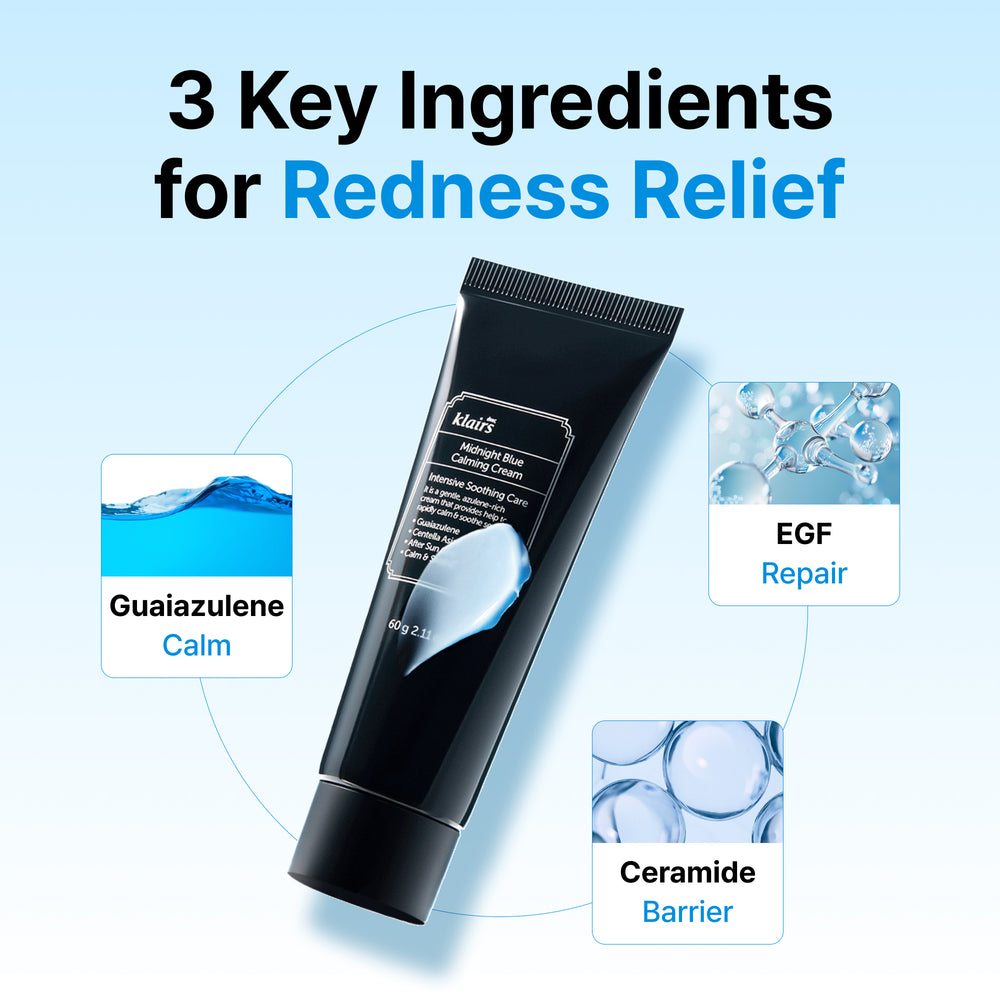
And one of them has an unmistakable visual signature — it's blue. Not the bottle. The formula itself. That blue is guaiazulene, a plant-derived compound (I break down the chemistry in the next piece). The reason Klairs' most recognizable reactive-skin products — the Midnight Blue line — are blue is the same reason they exist: thermally reactive skin needs something that helps it look and feel calmer, not just more moisturized.
So if your skin has been running warmer than usual lately — reacting to things it normally ignores, looking more flushed than it should — there's a name for that. And the answer might be lighter, and bluer, than your winter routine. (As always: antioxidants and soothers complement sunscreen, they don't replace it.)
A new free-sample drop opens at least once a week.
See this week's drop →